
Define Boundaries and Control Property Access
Fence Installation in Cincinnati for properties requiring privacy, security, or defined lot lines
Samy Gody Tree Service & Landscaping installs fences for residential and commercial properties throughout Cincinnati, working with clients who need privacy screening between neighbors, secure perimeters for yards with children or pets, or decorative borders that define property lines and keep foot traffic where it belongs. You're managing a backyard that's visible from surrounding homes, a commercial lot where boundaries are unclear, or a property where existing fencing has rotted posts, leaning panels, or missing sections. This service addresses those needs by setting posts in concrete below frost depth, attaching panels or boards to meet height and spacing requirements, and ensuring gates swing freely and latch securely.
Fence installation begins with site planning that confirms property lines, locates underground utilities, and identifies obstacles such as slopes, trees, or existing structures that affect layout. Material selection depends on function and appearance—privacy fences use solid panels or closely spaced pickets to block sightlines, wood fencing offers natural appearance with options for stain or paint, and decorative fencing provides lower-profile borders that mark boundaries without full enclosure. Posts are set at intervals determined by fence type and height, typically six to eight feet apart, with concrete footings poured to prevent frost heave and lateral movement.
Schedule a fence installation estimate to discuss layout, material options, and project timing.
What Changes After Fence Installation
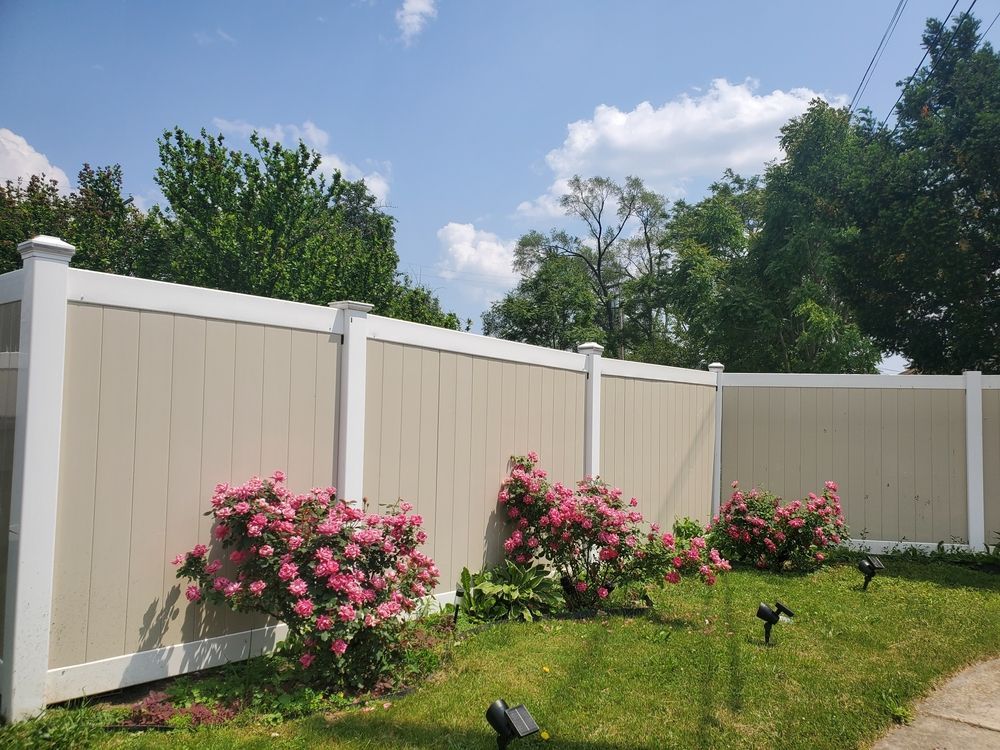
You'll see level fence panels attached to posts using galvanized fasteners, with top rails aligned and pickets or boards spaced consistently from end to end. Privacy fences stand six to eight feet tall depending on local codes, blocking views and reducing noise transmission between properties. Wood fences are installed with the finished side facing outward unless otherwise specified, and panels are trimmed or racked to follow grade changes without leaving gaps at the bottom.
Gates are framed with reinforced posts set in larger footings to handle the load of repeated opening and closing, and hardware includes hinges, latches, and self-closing mechanisms if requested. Commercial fencing may include taller posts, additional bracing, or locking gates to meet security or insurance requirements. Samy Gody Tree Service & Landscaping installs fences that comply with local setback rules and height restrictions, and coordinates with property owners to ensure the layout matches survey stakes or property descriptions.
The scope includes post installation, panel or board attachment, gate assembly, and site cleanup, but does not include grading to correct uneven terrain, removal of old fencing unless specified, or ongoing staining or sealing after installation. Wood fencing requires periodic maintenance to prevent rot and warping, including application of sealant or stain every few years depending on exposure. Decorative fencing serves as a visual boundary and may not provide full containment for pets or children without additional modifications.
Common Fence Installation Questions
Property owners in Cincinnati often ask about material durability, post depth, and how fences handle slopes or obstacles.
What materials are used for privacy fences?
Privacy fences are typically built with pressure-treated wood, cedar, or vinyl panels, with wood offering lower upfront cost and natural appearance, while vinyl requires less maintenance and resists rot and insect damage.
How deep are fence posts set?
Posts are set in holes at least two feet deep, or below frost depth, with concrete poured around the base to prevent heaving during freeze-thaw cycles common in Cincinnati winters.
When should old fencing be removed?
Old fencing should be removed when posts are unstable, panels are severely rotted, or the structure no longer meets your needs for privacy or security, as patching compromised sections rarely provides long-term reliability.
Why do some fence panels warp or lean?
Warping and leaning result from improper post depth, lack of concrete footings, or using green lumber that shrinks and twists as it dries, causing fasteners to loosen and panels to shift out of alignment.
How is fencing installed on sloped ground?
Fencing on slopes is either stepped, with each panel installed level and the bottom edge cut to follow the grade, or racked, with the entire panel angled to match the slope while maintaining consistent spacing between pickets.
Samy Gody Tree Service & Landscaping handles fence installations where property boundaries need definition, privacy is a priority, or security concerns require controlled access. Contact the team to arrange a site visit and review fencing options that suit your property layout.